Ditxolari and koplari
We say ditxolari (pronounce dee-cho-larry), zirtolari (pronounce seer-tow-larry) and testulari (pronounce tesh-two-larry) to refer to a person who is able to immediately give a reply which finishes with a word whose final syllable has the same consonance as that said by someone else.
Example: "Erosi diat, to, astoa...". "Beharko duk beraz lastoa!"
Very popular with the older generations, there are many Basques who still speak this way today.
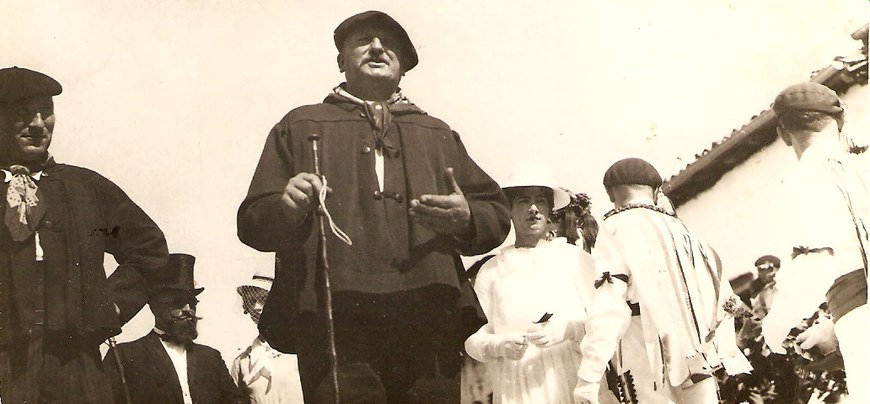
Compared to the ditxo, the kopla also has another distinctive feature. In the ditxo, two people usually need to take part since one answers the other. If on top of that, both are "ditxolaris", an entire conversation can be made to rhyme (but not sung).
Koplas are however sung alone. Koplas are rhythmical and rhyme, and usually have two verses, sometimes three. This form of composition was for a long time the most widespread in the Basque Country. Today it is used namely for cultural events during which there is a collection: on Xmas Eve, New Year’s Eve, the eve of Sainte Agatha, etc.
The kopla is also highly prized by trikitilaris (musicians who play the basque diatonic accordion and sing at the same time).
It is worth mentioning that the words of pastorales in Soule consist of quatrains which are very often composed of two koplas.
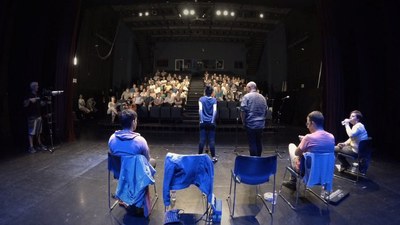 What is bertsolaritza? has been carried out with the aim of answering that question and showing people abroad what bertsolaritza is. The film enables people to discover bertsolaritza from its roots and to pay attention to the context, creative process and current situation of the discipline.
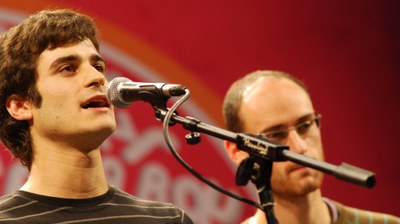 Bertsolaritza can designate both the art of improvising verses (bertsogintza) and the social movement created around it (bertsolaritza). The principal goal of this book is to present the necessary means for fully understanding bertsolaritza. A publication of the Etxepare Basque Institute, free to download.